Rebuilding the customer journey, from the website to the inbox and beyond
Website · UX · WordPress · Brand · Klaviyo · Email · SMS · Push · Loyalty
The snapshot
Brooklyn Donuts had a lot happening across the business, but the pieces weren’t always working together.
The website was dated and difficult to manage. The CRM was largely campaign-led, while loyalty, app ordering and customer data sat within the Shift8 ecosystem. There was an opportunity to connect the website, loyalty and marketing channels into a more considered customer experience.
The project started with a website rebuild in March 2026. By August, the new site was live and Klaviyo had replaced Mailchimp as the foundation for email, SMS and push. From there, the work has continued across loyalty, lifecycle marketing, brand and packaging.
Early results
+445%
WEBISTE SESSIONS
+487%
ORGANIC SEARCH SESSIONS
+45%
KLAVIYO ATTRIBUTED REVENUE GROWTH
+141%
SMS LIST GROWTH
+55%
ENGAGED PROFILES
The starting point
The old Brooklyn Donuts website wasn’t doing the brand any favours.
The design was dated, the UX was lacking and it even had a hamburger menu on desktop. It felt like a mobile design that had simply been stretched onto a larger screen. The client hated it too.
There was also a practical problem. The site wasn’t built in a visual editor, so the Brooklyn team couldn’t easily make updates themselves. Even straightforward changes could require a developer.
So the rebuild needed to do more than look better. It needed to make the customer experience better and make the site easier for the business to manage.
At the same time, Brooklyn had a loyalty programme, app ordering, customer data and an existing email database, but the CRM wasn’t yet being used as a broader lifecycle marketing tool.
The opportunity wasn’t simply to build a better website or send better emails. It was to start connecting the different parts of the customer experience.
Rebuilding the website
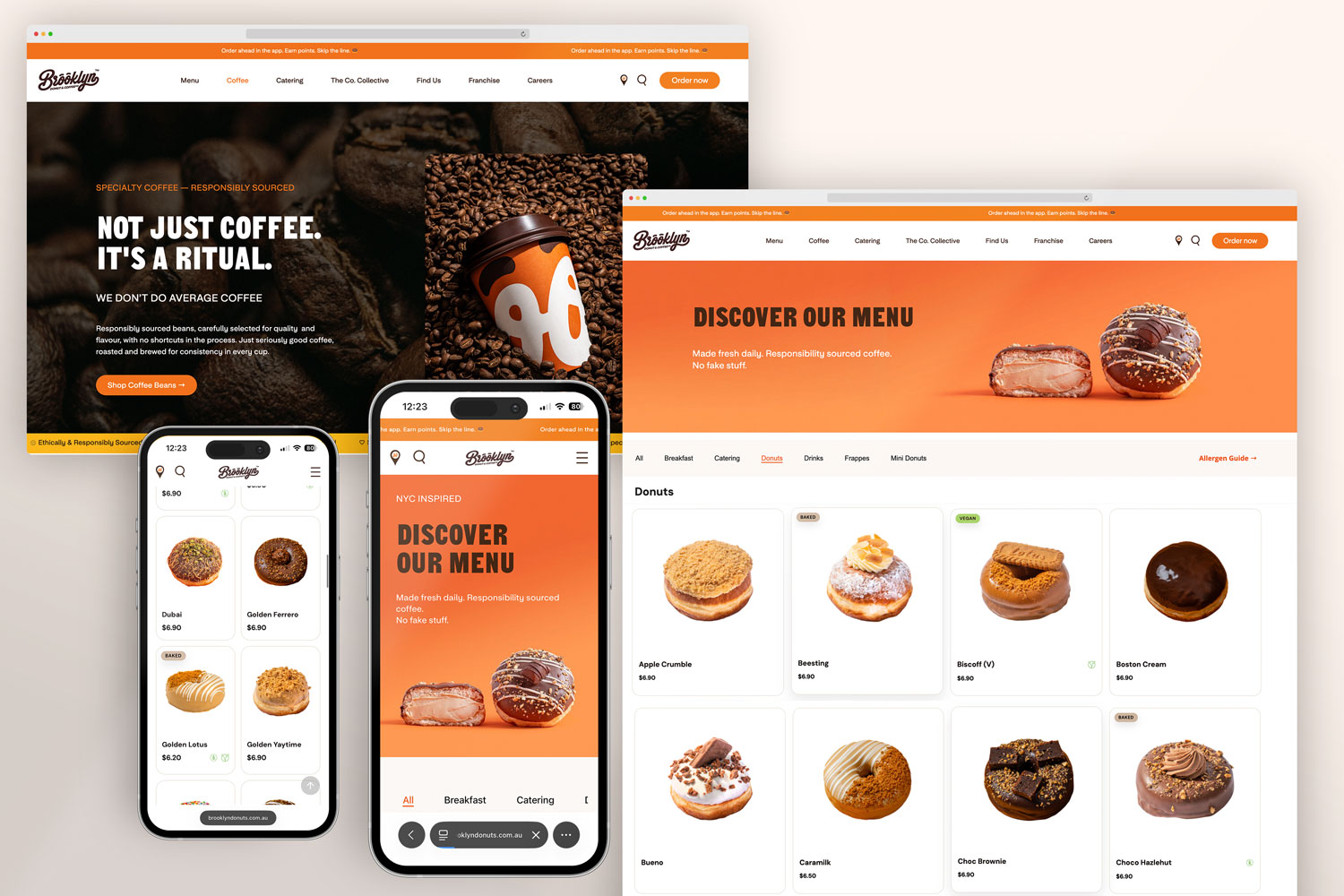
The new website brought together a cleaner visual direction with a more considered UX and content structure, while making the site much easier for the Brooklyn team to manage.
The rebuild covered UX strategy, information architecture, wireframes, visual design, WordPress design and build, and project management.
Rather than simply replacing the existing pages, the website was considered around what customers needed to find and what the business needed to manage day to day.
That meant giving some of the parts of the business that were previously difficult to manage a proper place on the site. Loyalty and coffee became more prominent parts of the customer experience, while menu, catering and locations were rebuilt around making it easier for customers to find what they need.
Behind the scenes, the site was also connected more closely to the systems Brooklyn already uses. The menu can be updated without rebuilding the page, catering pulls through from Shift8, the store locator connects with Google, the Instagram feed updates automatically and the franchise form connects with the existing franchise platform.
The result is a website that isn’t just a better front-end experience. It takes some of the ongoing manual work out of managing the business online, too.
The aim was simple: make the site work harder without making it harder for the client to manage.
Refining the brand
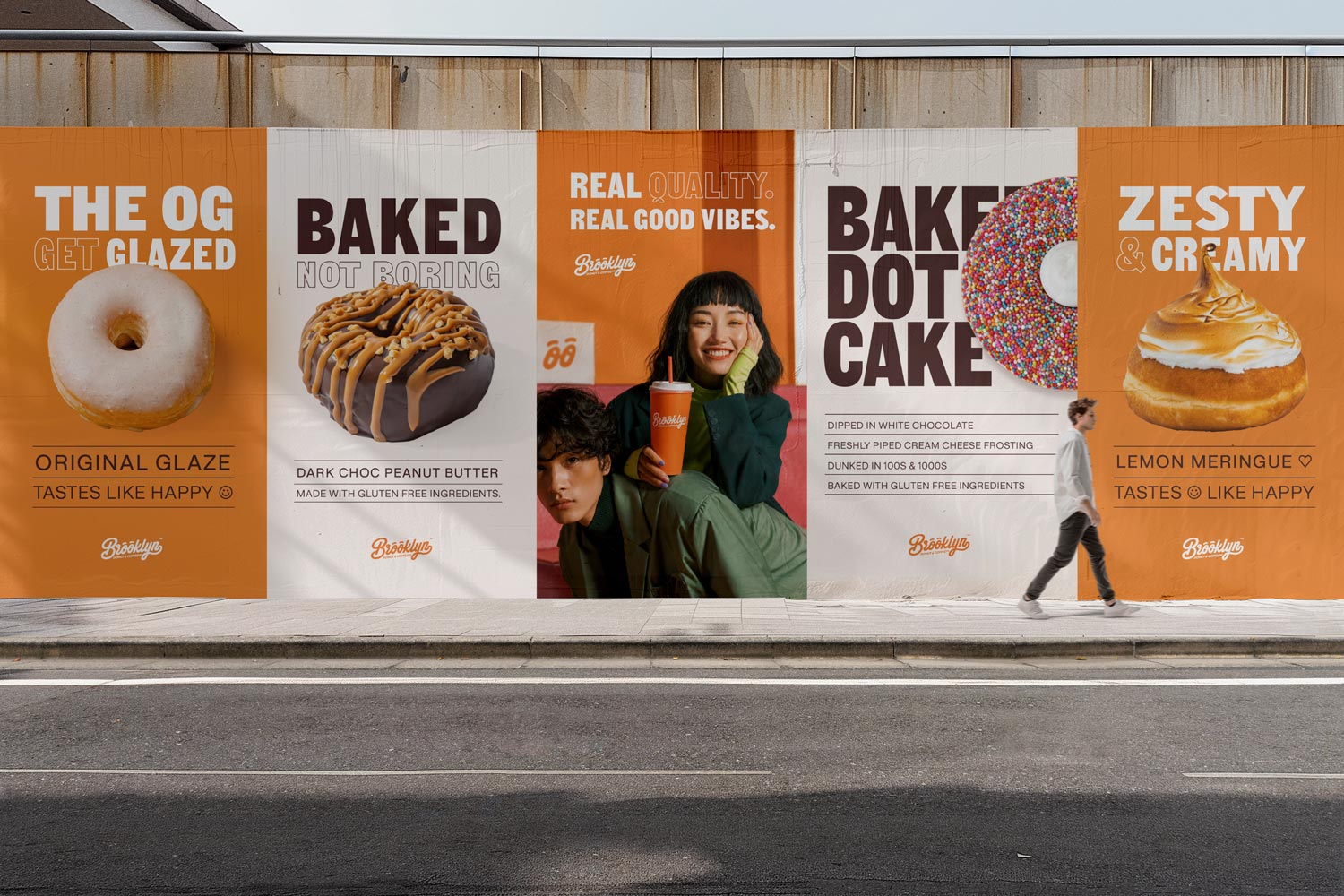
The website was part of a broader shift in how Brooklyn Donuts was presenting the brand.
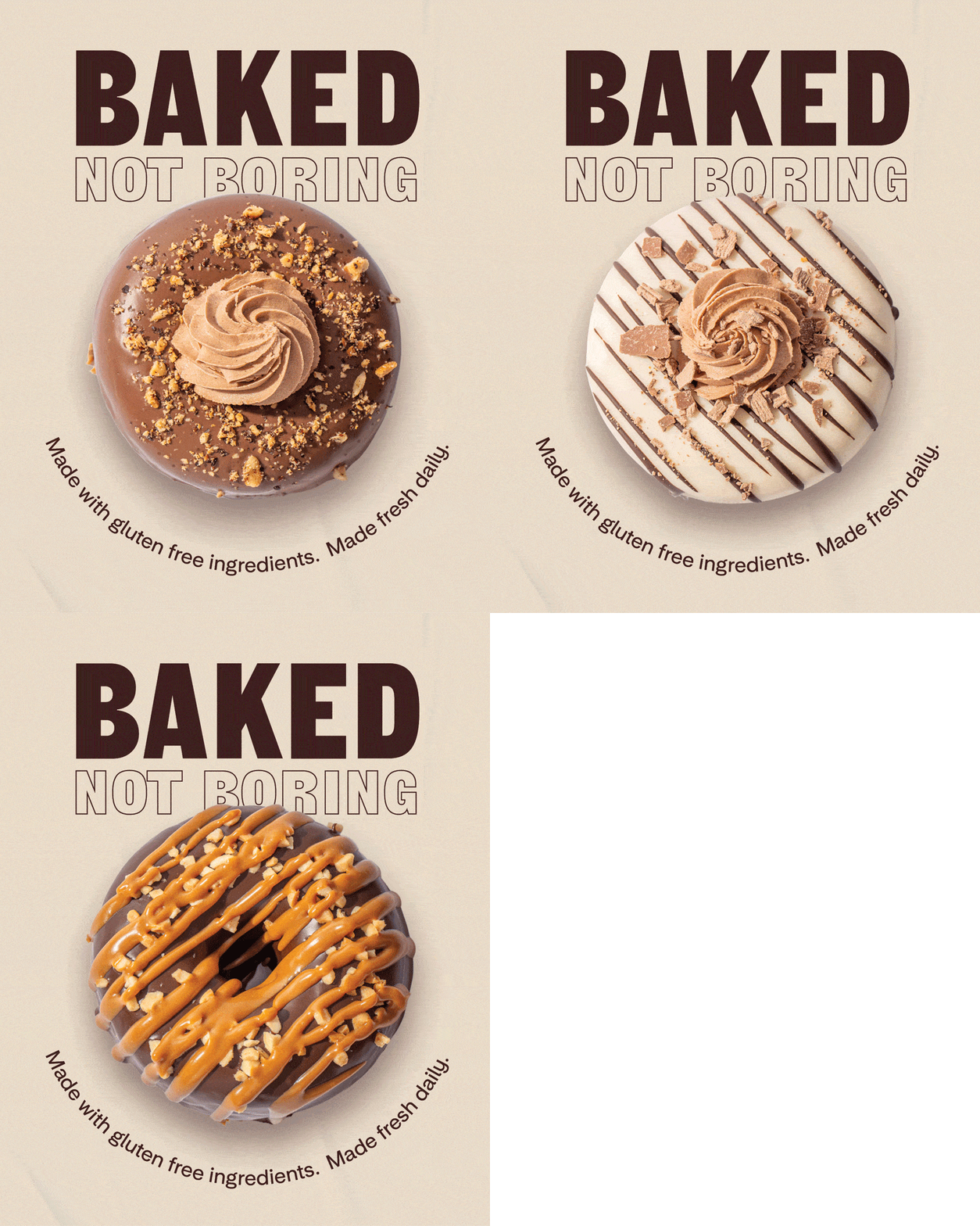
This wasn’t a rebrand. The core typography and colour palette stayed, but the visual direction was refined to feel more considered and premium.
That meant moving away from elements that no longer felt right for the business, including “Born in Brooklyn”, which felt too American for an Australian brand, and taking a closer look at photography, layout and overall visual presentation.
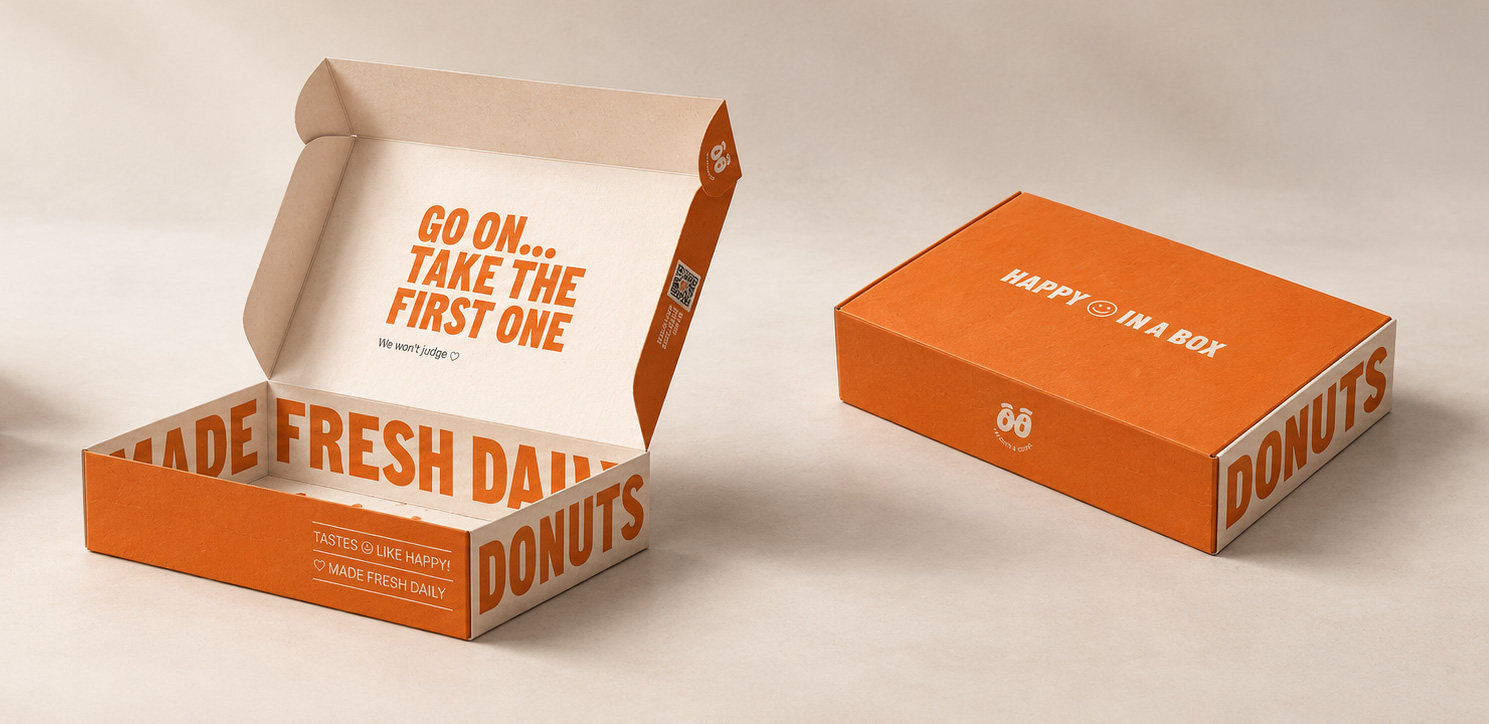
That same thinking is now being applied to the packaging, with the range being redesigned to give the brand a more polished and cohesive presence across the products customers see in store.
From campaign emails to customer lifecycle
The CRM work initially started in Mailchimp, but it became clear that Brooklyn needed more flexibility than a campaign-led approach could provide.
For a food business, regular email sends simply to fill a calendar weren’t the answer. The opportunity was to use customer behaviour, loyalty and timing to make communication more relevant.
So the CRM strategy moved towards automation-first, Push/SMS-led and campaign-light, with the focus on repeat purchase, loyalty retention and customer value.
Campaigns still have a role, but they need to have a reason to exist. A new product, a useful offer, a competition or something customers will actually want to act on.
The automated customer journey can then do more of the ongoing work.
Moving to Klaviyo
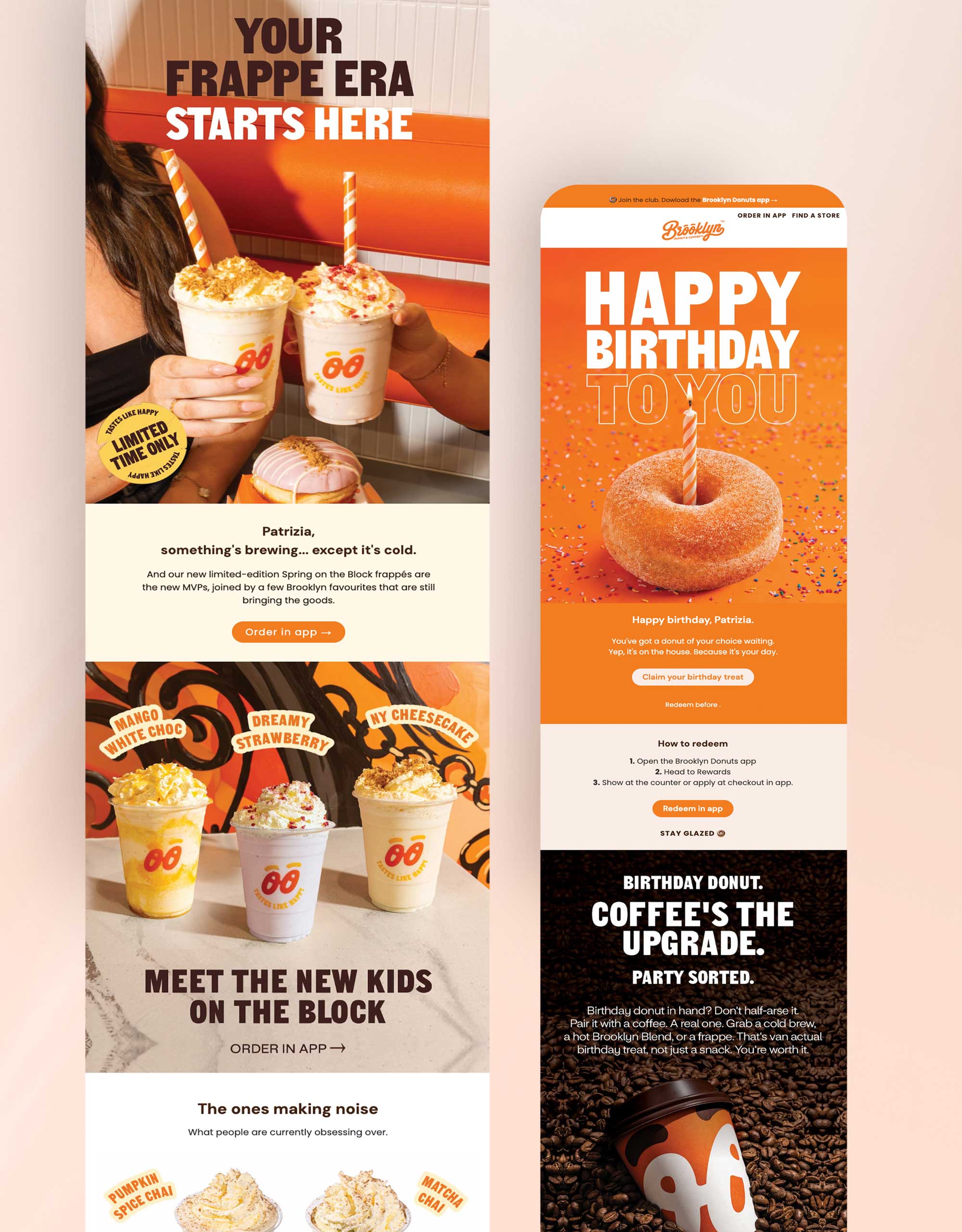
In August, Brooklyn moved from Mailchimp to Klaviyo, opening up email, SMS and push within the same CRM environment.
A significant part of the work was making sure the Shift8 data and customer behaviour could support the strategy, rather than simply moving the existing database to a new platform.
The CRM was mapped around the customer lifecycle, from joining and activating through to repeat purchase, loyalty and reactivation.
Each channel also has a different role.
Push is suited to immediate, contextual communication.
SMS is reserved for moments where there’s a clear reason to act.
Email provides more space for launches, education, discovery and storytelling.
The result is a system designed around what is happening with the customer, rather than simply what needs to be sent that week.
Putting the strategy to work
The first lifecycle flows went live in the final week of September. (2026)
One of the first was Reward Earned, which responds when a customer earns a loyalty reward rather than relying on the next scheduled campaign.
In roughly one week, the flow generated measurable store visits and revenue, with an 8.1% store-visit rate from flow messages.
The communication isn’t happening because it’s Tuesday and Brooklyn needs to send an email. It’s happening because something happened in the customer’s relationship with the brand.
Giving customers a reason to engage
Growing the database wasn’t about asking people to sign up for another marketing channel. There needed to be a reason to want to be part of it.
International Coffee Day provided a simple example. Customers could sign up to the Brooklyn SMS club for the chance to receive a free coffee, turning a promotional moment into an opportunity to grow the database.
The campaign drove a significant increase in SMS sign-ups over the campaign period and generated a 10.15% click rate, showing what can happen when the offer, message and action are all clear.
It became a useful part of the broader growth strategy: give customers a reason to engage, then build on that relationship beyond the initial interaction.
Connecting the customer experience
The Brooklyn Donuts website, loyalty programme, Shift8 and Klaviyo aren’t being treated as separate projects.
The website makes it easier for customers to find, explore and interact with the brand. The CRM can then use customer behaviour to make communication more relevant, while the brand continues to develop consistently across digital and physical touchpoints.
Together, these pieces create a more connected omnichannel customer experience, with each part supporting the next.
The website and CRM are different pieces of the project, but they are working towards the same thing: a better customer experience that also works for the business behind it.
What changed
The new website launched in August 2026.
Between 1 August and 4 October, it recorded 38,392 sessions, up 445% against the previous period, with organic search accounting for 24,916 sessions, up 487%. The rebuilt Menu page received 9,910 views, while the new Text Club page received 5,400. Locations received 3,400 views and Web Ordering 3,100.
The CRM is showing early signs of the same shift.
September was the first month with email, SMS and push available in Klaviyo alongside live lifecycle flows. Email click rate increased from 0.45% to 2.52%, while the SMS database grew by 141%.
The first live flows also began generating measurable store visits and revenue within their first week, giving the new lifecycle strategy an early commercial signal.
The work is still developing, so these are early results rather than a finished picture.
Push, for example, is technically working but only 23 devices currently have it enabled. Growing that audience is one of the next pieces of work.
The bigger picture
Brooklyn Donuts didn’t need another website sitting on its own, or another email marketing calendar sitting beside it.
The opportunity was to make the different parts of the customer experience work together.
The website is easier to use and easier for the team to manage. The CRM is moving from regular broadcast communication towards lifecycle marketing. Loyalty and customer data are becoming more useful, and the brand is continuing to develop across the digital and physical experience.
It’s an ongoing project, but the direction is clear: Build the foundations, connect the pieces and make each customer interaction work a little harder.